















Sense of Taste
- HOME
- STORY
- TOKYO WAVES magazine
- 2025Vol.3 sense of taste
2026.03.01
- STORY
Sense of Touch
“Delicious” Is Completed Beyond the Plate
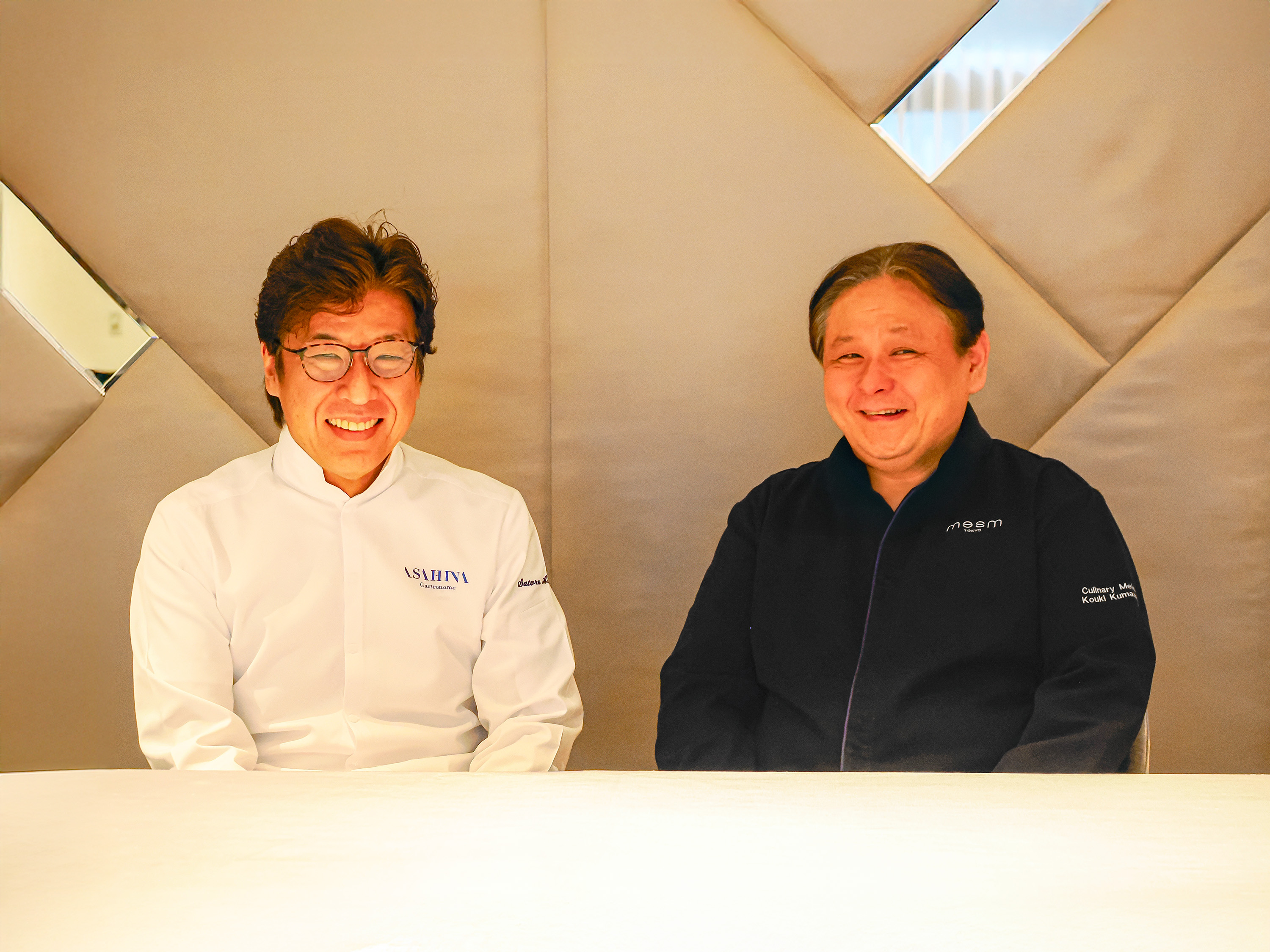
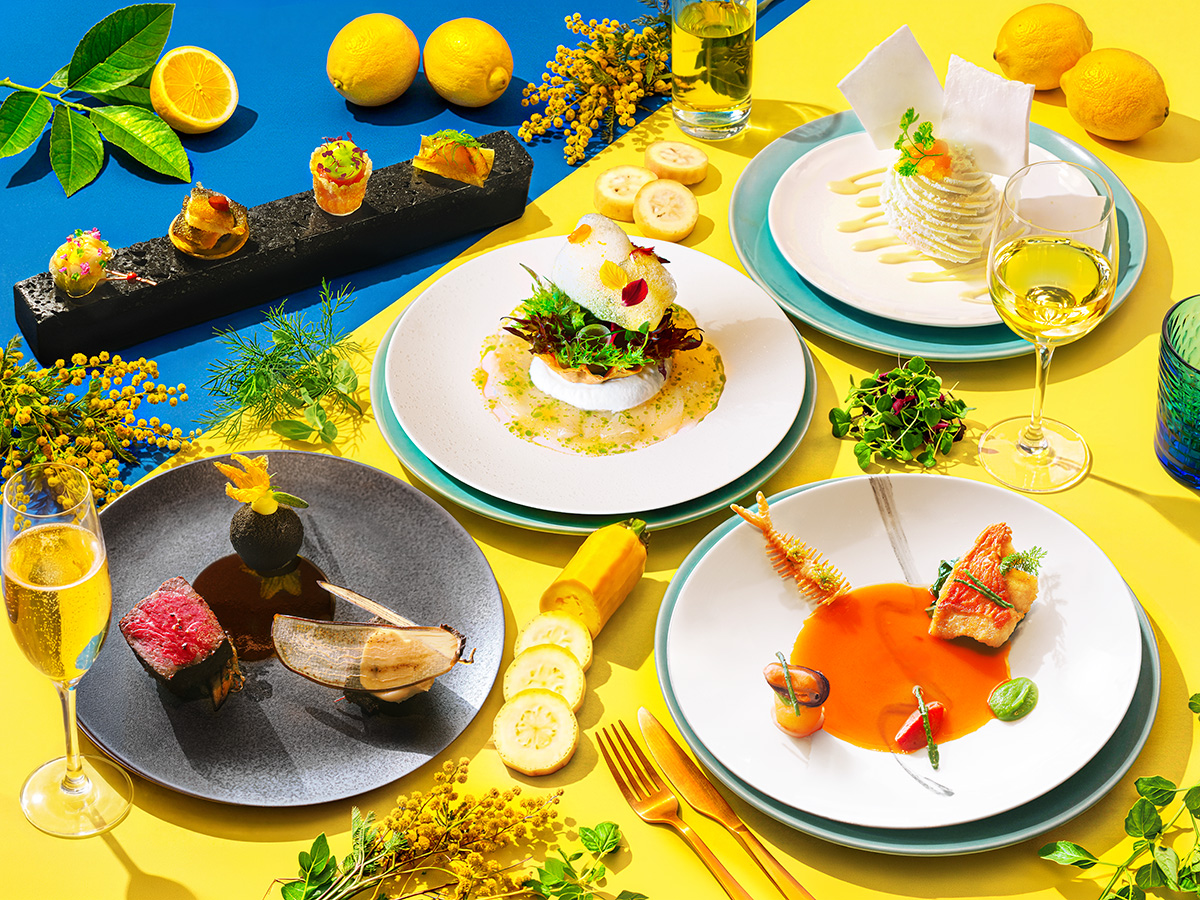
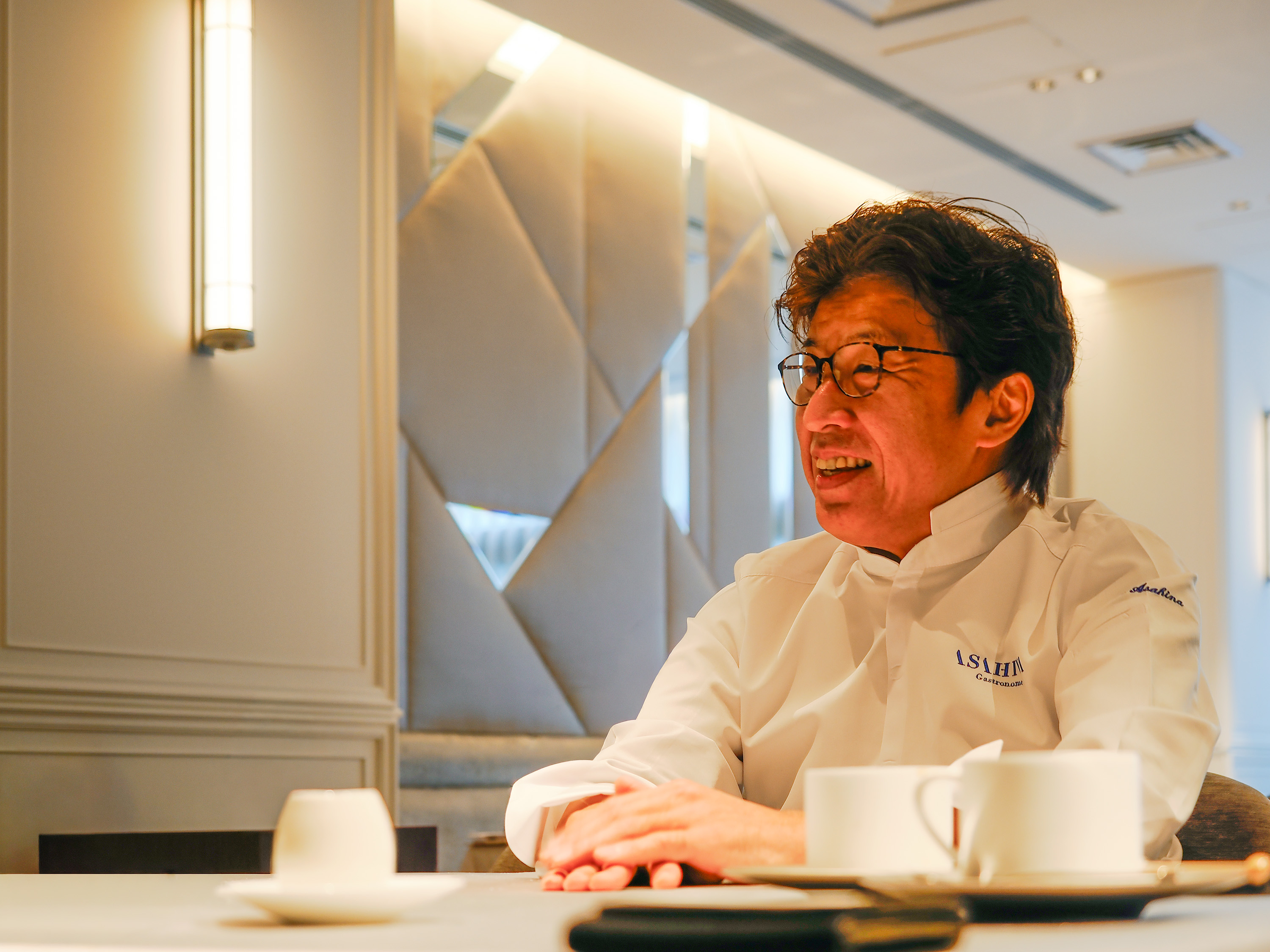
For Tokyo Waves Magazine Vol.3 “Sense of Taste,” Kumamoto named as his conversation partner Satoru Asahina, owner-chef of “Asahina Gastronom” in Kabutocho. Chef Asahina distills his restaurant’s philosophy into two words: people and cuisine. To see food as culture—and to believe that, through dining, relationships between people deepen. To learn from the classics, then update them with today’s sensibilities; to give shape to inspiration and unravel the allure of French cuisine. With those two pillars, he builds his plates day by day.
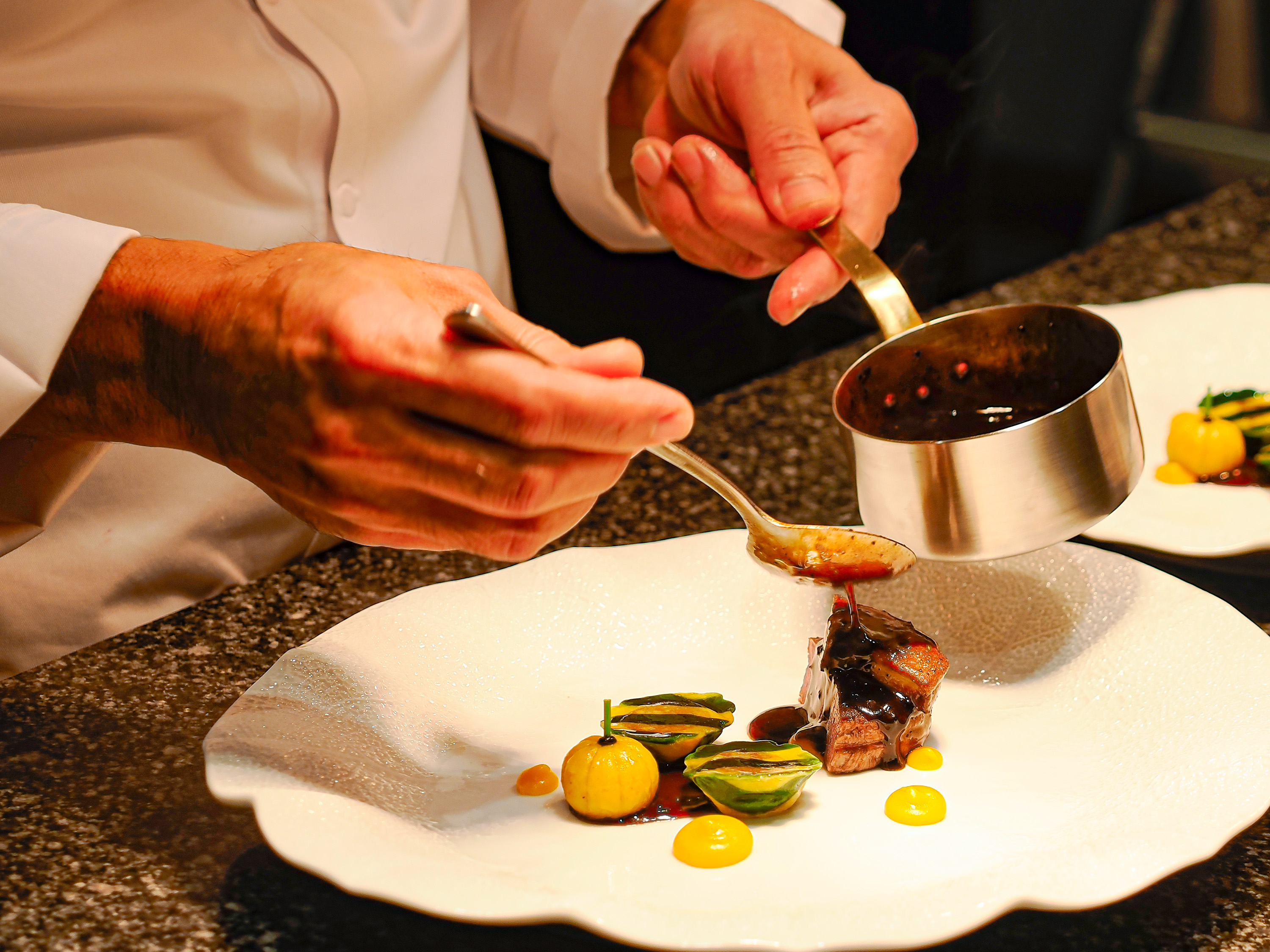
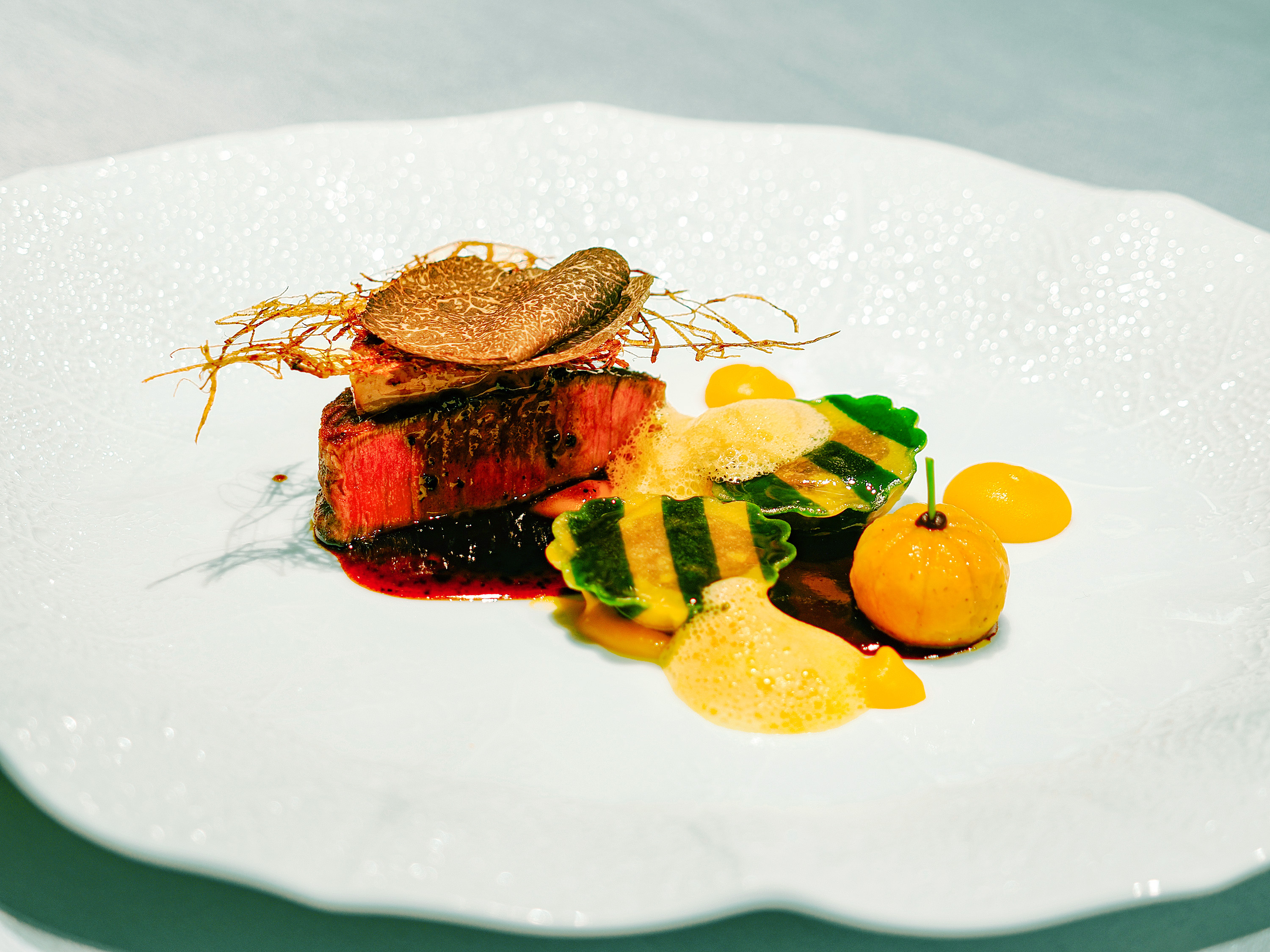
Kumamoto: You’re not asking about an ingredient’s nationality, but its necessity in the flavor. That may be why, more than showiness, a sense of sincerity comes forward. Your dishes feel deeply layered—not only seasonal, but built through time and labor. To make “exceptional French” stand out in Tokyo must come with an enormous load.
Asahina: Tokyo is dense—with information and experiences. So “simply good” gets buried. But “being eccentric” alone doesn’t endure either. In the end, you’re pushed to stack the fundamentals. Trends move fast, and comparisons are unforgiving. That’s why cuisine has to speak in layers: the viscosity of a sauce, how aroma rises, how temperature is lowered, the spacing between plates. Those accumulations form an outline that can withstand the city’s speed.
What Ultimately Remains Is the Difference in Aesthetic Sense
Kumamoto: In terms of “facing the guest,” how do you approach it?
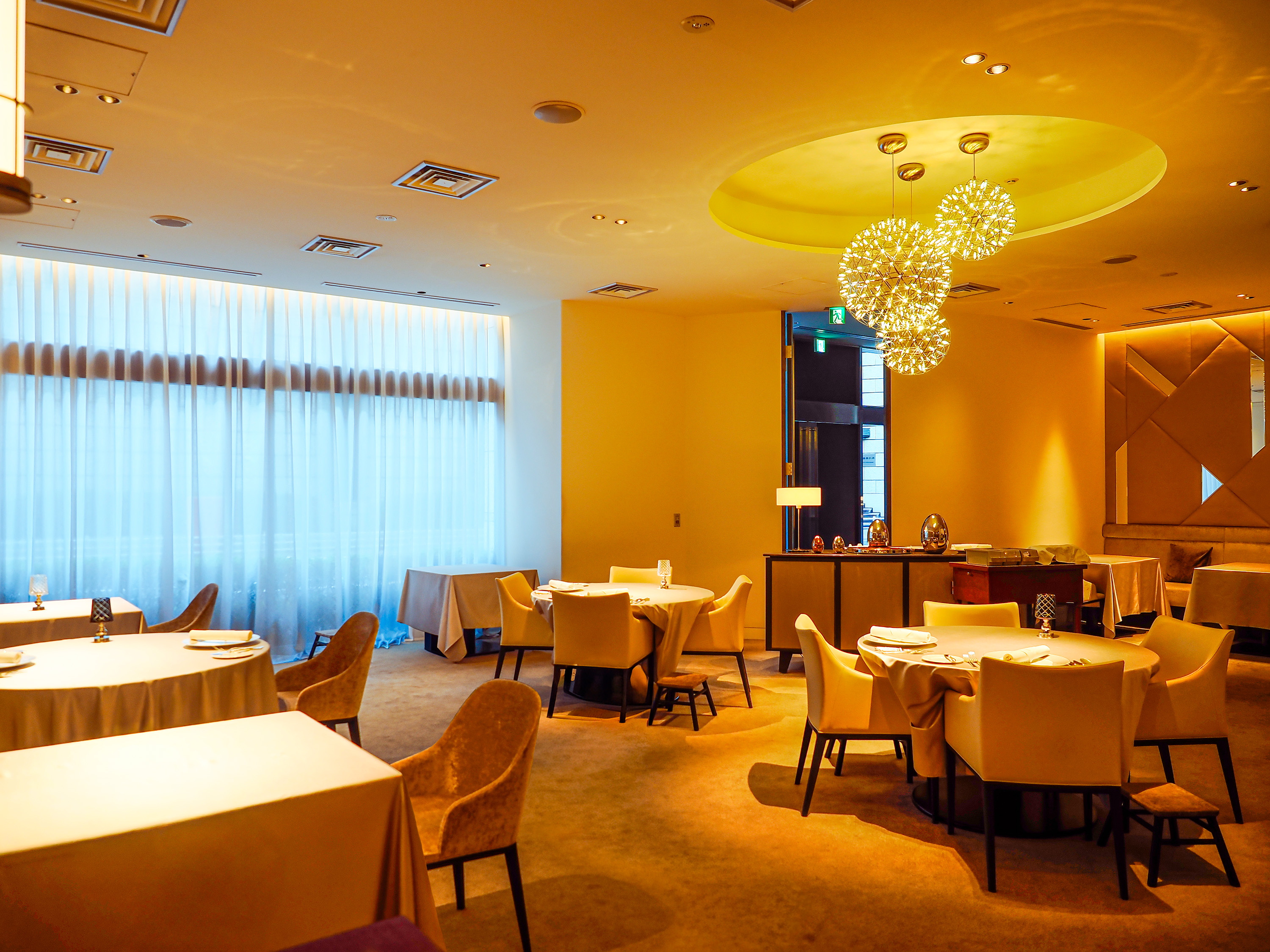
Asahina: In the end, it’s all “for the guest.” You keep thinking from the guest as your starting point. Today, you can eat delicious French cuisine almost anywhere. Precisely because the market is mature, I think what’s tested is whether you can trust yourself. If it’s a dish you present with conviction, guests will follow. Believing that, I face everything each day—food, staff, space—with sincerity. In a mature market, differences in technique narrow and information levels out. What remains, ultimately, is the difference in aesthetic sense.
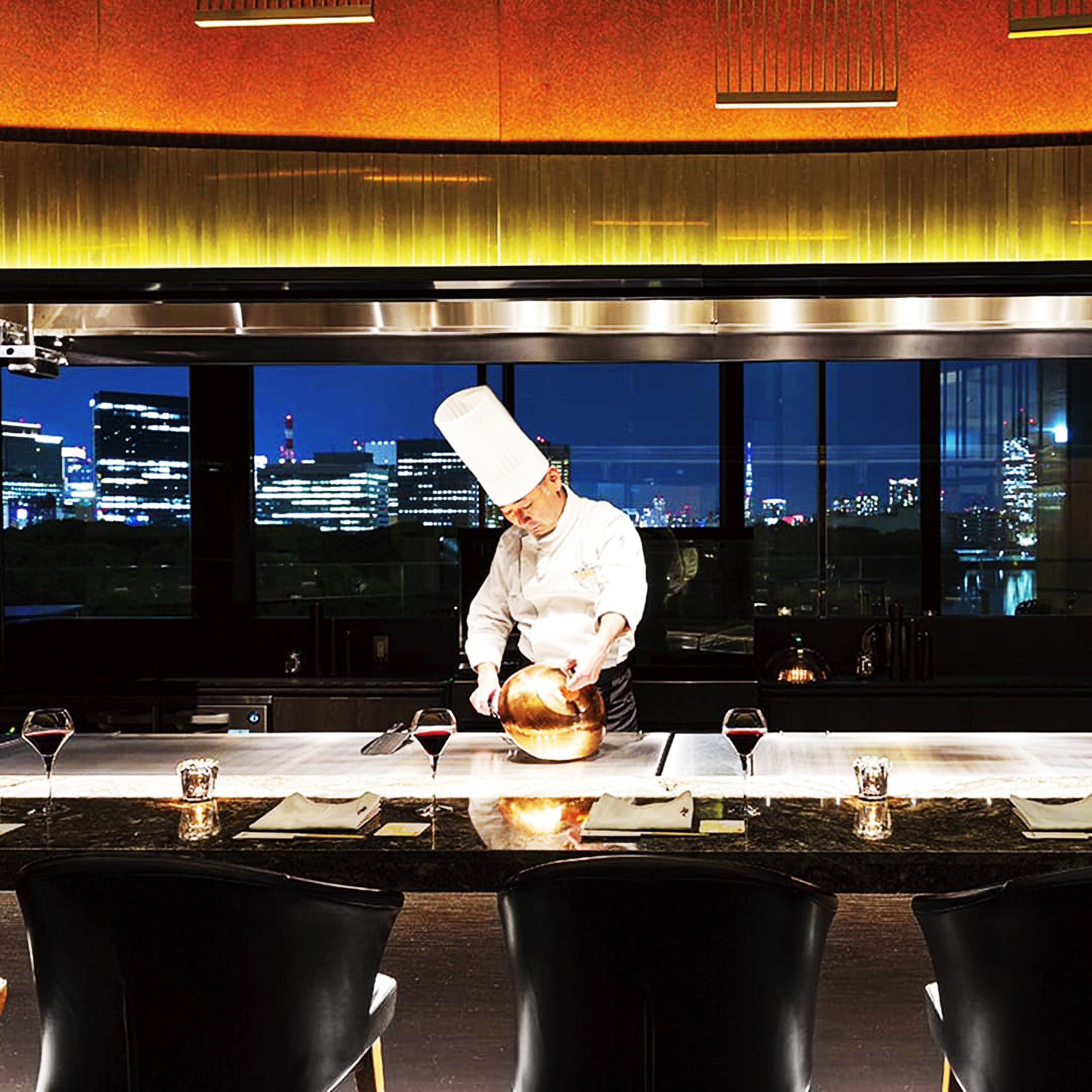
Kumamoto: Taste isn’t a point. A course is a line—and that line breathes through tempo. The more plates continue, the dining time itself becomes a composed structure. At “Chef’s Theatre,” too, of course the cuisine matters—but impressions change depending on when and how we deliver. After sustained, quiet concentration, there’s a moment when taste suddenly opens all at once.
Asahina: That’s why tempo matters. Not “fast” or “slow,” but “not letting the guest get lost.” You lead them properly to the point where the flavor’s outline appears. That’s how I think of it.
What Comes Next?
Asahina: A higher peak. This year, I want to earn three Michelin stars. And I want to convey the joy of a grand maison. Including both cuisine and space, I want guests to leave with something memorable—thinking, “So this is how joyful a grand maison restaurant can be.”
Kumamoto: It’s powerful to speak plainly about “joy” within the context of gastronomy. Joy isn’t lightness—I think it’s an emotion that rises as the outcome of precision.
Delicious food draws people across borders. And yet “delicious” alone does not always linger in the heart. Taste is written as “to remember flavor”—and as the word suggests, flavors that remain are always bound to experience.
“Delicious” Is Completed Beyond the Plate
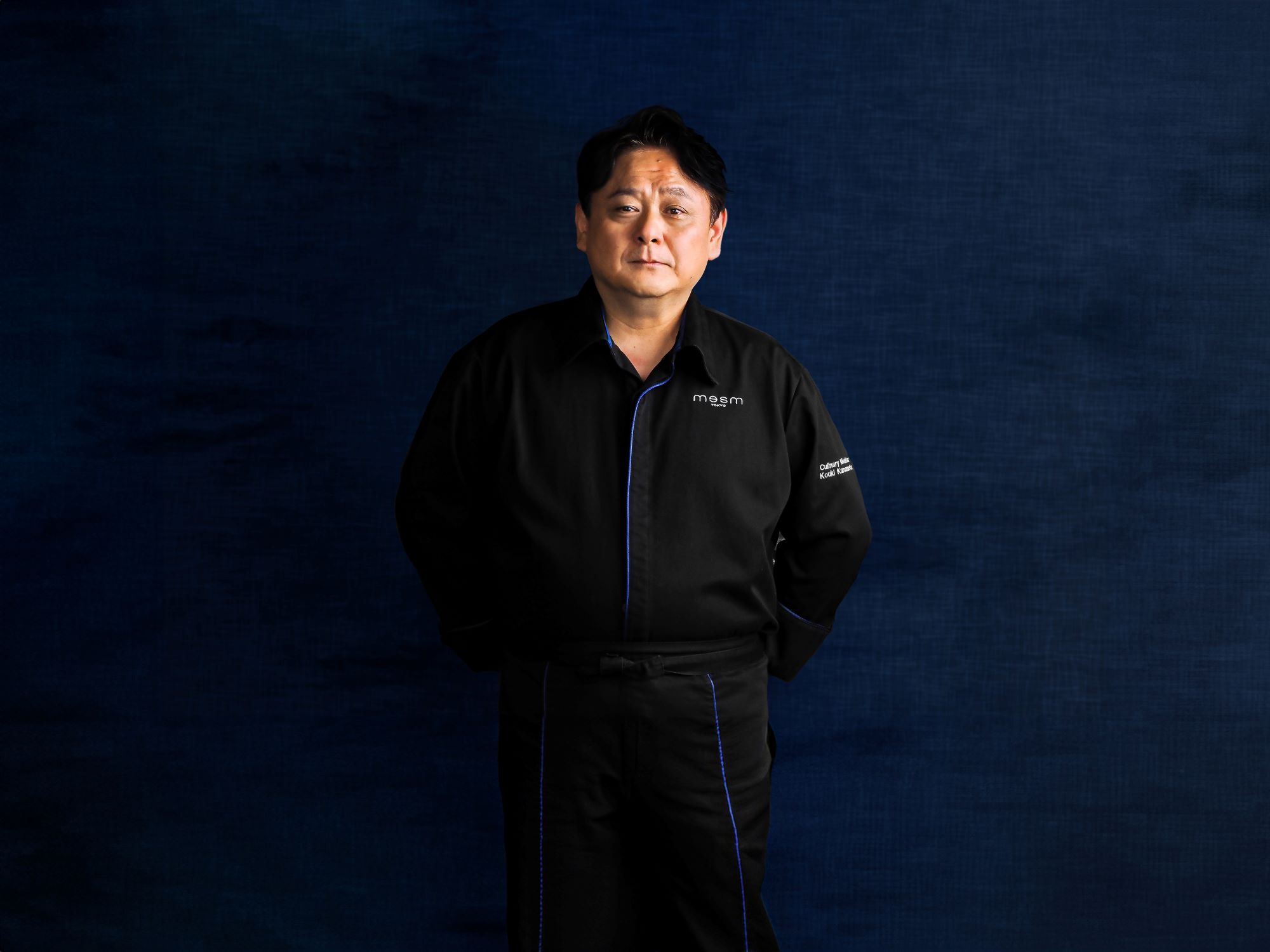
In Conversation: Satoru Asahina, Owner-Chef of “ASAHINA Gastronome” × Koki Kumamoto, Culinary Meister at “mesm Tokyo, Autograph Collection”
The air by the water quietly carries temperature, scent—and sound.
Light over Tokyo Bay changes expression from moment to moment, softening even the city’s sharpest outlines. At mesm Tokyo’s French dining venue “Chef’s Theatre,” Culinary Meister Koki Kumamoto composes dishes while living with that daily “shimmer.” Because taste isn’t something with a single correct answer—it rises, instead, from within the experience of the moment.
For Tokyo Waves Magazine Vol.3 “Sense of Taste,” Kumamoto named as his conversation partner Satoru Asahina, owner-chef of “Asahina Gastronom” in Kabutocho. Chef Asahina distills his restaurant’s philosophy into two words: people and cuisine. To see food as culture—and to believe that, through dining, relationships between people deepen. To learn from the classics, then update them with today’s sensibilities; to give shape to inspiration and unravel the allure of French cuisine. With those two pillars, he builds his plates day by day.
“Delicious” Doesn’t End with the Food
Kumamoto: Chef Asahina, what does “delicious” mean to you? We often end up talking about technique or ingredients, but today I’d love to ask from a slightly wider perspective.
Asahina: It goes without saying that the food must be delicious—that’s the baseline. Beyond that, when service, cuisine, and space become one, the restaurant’s completeness rises. Only then does “delicious” truly take shape. The word taste may seem confined to the tongue, but in reality it’s open. The plate’s temperature, the tempo of delivery, the moment a sauce’s aroma unfurls, the brief hush that settles over the dining room—when countless elements resonate at once, “delicious” is completed inside the guest.
Kumamoto: So it’s about elevating taste into experience design.
Asahina: Exactly. And to preserve tradition, you have to tune it for the present.
Kumamoto: Your cuisine feels grounded in the weight of the classics, yet sharpened with a modern edge.
Asahina: That’s my axis. I dive into the history of French cuisine and reconstruct recipes through my own interpretation. It’s not about decorating the past—it’s about re-reading it so it can pass through into the future.
Kumamoto: I see. That stance of “tuning the classics toward the future” becomes the outline of the food itself.
Asahina: Thank you. From how the introduction layers into the course, to how consomé and dessert are presented—I build it all as a single experience.
Japanese Ingredients: Not the “Lead,” but the “Essence”
Kumamoto: Chef Asahina, what does “delicious” mean to you? We often end up talking about technique or ingredients, but today I’d love to ask from a slightly wider perspective.
Asahina: It goes without saying that the food must be delicious—that’s the baseline. Beyond that, when service, cuisine, and space become one, the restaurant’s completeness rises. Only then does “delicious” truly take shape. The word taste may seem confined to the tongue, but in reality it’s open. The plate’s temperature, the tempo of delivery, the moment a sauce’s aroma unfurls, the brief hush that settles over the dining room—when countless elements resonate at once, “delicious” is completed inside the guest.
Kumamoto: So it’s about elevating taste into experience design.
Asahina: Exactly. And to preserve tradition, you have to tune it for the present.
Kumamoto: Your cuisine feels grounded in the weight of the classics, yet sharpened with a modern edge.
Asahina: That’s my axis. I dive into the history of French cuisine and reconstruct recipes through my own interpretation. It’s not about decorating the past—it’s about re-reading it so it can pass through into the future.
Kumamoto: I see. That stance of “tuning the classics toward the future” becomes the outline of the food itself.
Asahina: Thank you. From how the introduction layers into the course, to how consomé and dessert are presented—I build it all as a single experience.
Japanese Ingredients: Not the “Lead,” but the “Essence”
Kumamoto: Let’s talk about ingredients. What do you value most?
Asahina: I use Japanese ingredients not as the lead, but as an essence. When you cook French cuisine in Japan, the ingredients can be so compelling that, before you know it, the food tilts “Japanese.” That balance is difficult. Of course seasonality matters—but I won’t compromise the fact that it is French. Within that, I use Japanese ingredients as an essence. Against the backdrop of French ingredients and context, I let Japanese ingredients “ignite” at key points, then build the flavors—something like that.
Kumamoto: You’re not asking about an ingredient’s nationality, but its necessity in the flavor. That may be why, more than showiness, a sense of sincerity comes forward. Your dishes feel deeply layered—not only seasonal, but built through time and labor. To make “exceptional French” stand out in Tokyo must come with an enormous load.
Asahina: Tokyo is dense—with information and experiences. So “simply good” gets buried. But “being eccentric” alone doesn’t endure either. In the end, you’re pushed to stack the fundamentals. Trends move fast, and comparisons are unforgiving. That’s why cuisine has to speak in layers: the viscosity of a sauce, how aroma rises, how temperature is lowered, the spacing between plates. Those accumulations form an outline that can withstand the city’s speed.
What Ultimately Remains Is the Difference in Aesthetic Sense
Kumamoto: In terms of “facing the guest,” how do you approach it?
Kumamoto: In terms of “facing the guest,” how do you approach it?
Asahina: In the end, it’s all “for the guest.” You keep thinking from the guest as your starting point. Today, you can eat delicious French cuisine almost anywhere. Precisely because the market is mature, I think what’s tested is whether you can trust yourself. If it’s a dish you present with conviction, guests will follow. Believing that, I face everything each day—food, staff, space—with sincerity. In a mature market, differences in technique narrow and information levels out. What remains, ultimately, is the difference in aesthetic sense.
Kumamoto: Taste isn’t a point. A course is a line—and that line breathes through tempo. The more plates continue, the dining time itself becomes a composed structure. At “Chef’s Theatre,” too, of course the cuisine matters—but impressions change depending on when and how we deliver. After sustained, quiet concentration, there’s a moment when taste suddenly opens all at once.
Asahina: That’s why tempo matters. Not “fast” or “slow,” but “not letting the guest get lost.” You lead them properly to the point where the flavor’s outline appears. That’s how I think of it.
What Comes Next?
Kumamoto: What do you aim for next?
Asahina: A higher peak. This year, I want to earn three Michelin stars. And I want to convey the joy of a grand maison. Including both cuisine and space, I want guests to leave with something memorable—thinking, “So this is how joyful a grand maison restaurant can be.”
Kumamoto: It’s powerful to speak plainly about “joy” within the context of gastronomy. Joy isn’t lightness—I think it’s an emotion that rises as the outcome of precision.
Closing
Delicious food draws people across borders. And yet “delicious” alone does not always linger in the heart. Taste is written as “to remember flavor”—and as the word suggests, flavors that remain are always bound to experience.
What these two chefs share is strikingly simple: “delicious” is the baseline. Using good ingredients is also the baseline. Beyond that lies the question of how much intention you pour in—who you deliver it to, and in what form. In Tokyo, where restaurants crowd together and comparisons are inevitable, they refuse to fear being measured. They trust their own palates and senses, trust the guest’s sensitivity too, and keep stacking one day upon the next. One can only take off one’s hat before such sincerity.
- Information -
1F, M-SQUARE Bldg., 1-4 Nihonbashi Kabutocho, Chuo-ku, Tokyo 103-0026, Japan
TEL: +81 3-5847-9600 FAX: +81 3-5847-9601
Hours
Lunch: 12:00–15:30
Reservation times: 12:00 / 12:15 / 12:30
Lunch service is available on Saturdays and Sundays only.
Dinner: 18:00–22:30
Reservation times: 18:00 / 18:30 / 19:00 / 19:30 / 20:00
Closed: Tuesdays and Wednesdays
- Interviewer –
Shiho Sugimoto, Director of Marketing Communications